
We get calls like this every week at Lice Busters.
A parent, voice shaking, explains they found something in their seven-month-old’s hair. They’re not sure what it is – tiny white specks, maybe some movement. They’ve already Googled “can babies get lice” and gone down a rabbit hole. By the time they call us, they’ve convinced themselves their infant is in medical danger.
First thing we do: slow them down.
Because yes, babies can get lice. But the way it unfolds in real life – the source, the spread, the treatment – is almost never what parents imagine when they’re in full panic mode. After running Lice Busters and treating hundreds of family cases, I’ve seen the same patterns repeat so consistently that I could write the script before a parent says a word.
This article is that script. By the end, you’ll know whether your baby actually has lice, how it almost certainly got there, and exactly what to do – depending on how old your baby is.
The Short Answer: Yes, Babies Can Get Lice
Lice don’t care how old you are. They care about one thing: hair. If a baby has hair – even just a fine layer of peach fuzz – lice can establish a colony there.
That said, babies get lice far less often than school-age children. The American Academy of Pediatrics estimates that lice affect between 6 million and 12 million children each year in the United States, and the vast majority of those cases are kids between 3 and 11 years old. Babies and toddlers under 2 make up a small fraction of that number.
The reason isn’t biological immunity. Lice don’t know your baby’s birth certificate. The reason is behavioral – babies simply don’t have the head-to-head contact patterns that elementary-school kids do. They’re not at sleepovers, not in huddles over a shared tablet, not pressing heads together on a school bus. Their social world is mostly their immediate family, which limits their exposure.
But here’s the critical point: when lice do reach a baby, it’s almost always through that immediate family. And that changes everything about how you handle it.
How Lice Actually Spreads to Babies
Head lice spread through direct head-to-head contact. That’s it. They cannot jump, they cannot fly, and despite what generations of parents have been told, they very rarely spread through shared objects like hats, brushes, or pillowcases. A study published in Pediatric Dermatology found that the risk of acquiring lice from inanimate objects is extremely low compared to direct contact.
For a baby, the direct contact vectors are obvious:
- Cuddles and snuggling with an infested sibling
- Co-sleeping (an extremely efficient transmission route)
- Being held, carried, or played with by a parent or caregiver who has lice
- Sitting in the same car seat or carrier directly after an infested sibling
The sibling route is by far the most common. When we get a call about a baby with lice, there is almost always an older child in the house who has had an active case – sometimes for weeks – before anyone noticed.
This is the detail every generic health article misses: the baby is a downstream victim, not the origin point.
What We Actually See at Lice Busters: The Pattern Behind Every Baby Case
This is the section no competitor article is going to give you, because they’re writing from research databases instead of from the treatment chair.
In the cases we’ve handled at Lice Busters involving babies or toddlers under 2, the timeline almost always follows the same structure:
A school-age child brings lice home from a classroom or playdate. The child isn’t itching yet – itching from lice often doesn’t start for 2 to 6 weeks after infestation, because it requires developing a sensitivity to louse saliva. So the lice spread quietly through the household. The baby, sleeping next to or being held near the infested sibling, picks up lice through direct contact.
By the time a parent notices something on the baby’s head – because babies are often checked more carefully than older kids at bath time – the older child has had a full-blown case for a month.
What happens next is the most common mistake I see: parents treat the baby and only the baby.
They’re focused on the infant because the infant feels most vulnerable. But the baby didn’t originate the lice. If you treat the baby while leaving an older sibling untreated, the baby will almost certainly be re-infested within days. We’ve had parents call back – confused, frustrated – saying the treatment didn’t work on their baby. What actually happened was that they’d left an active source case untreated in the same household.
The rule at Lice Busters: check every head in the house on the same day. Treat every infested head simultaneously. The baby’s treatment may look different from the siblings’, but the strategy has to cover everyone.
Signs Your Baby Has Lice: What to Look For
Parents often can’t tell lice from dandruff or cradle cap, which is understandable – all three produce white or off-white debris near the scalp. Here’s how to tell the difference:
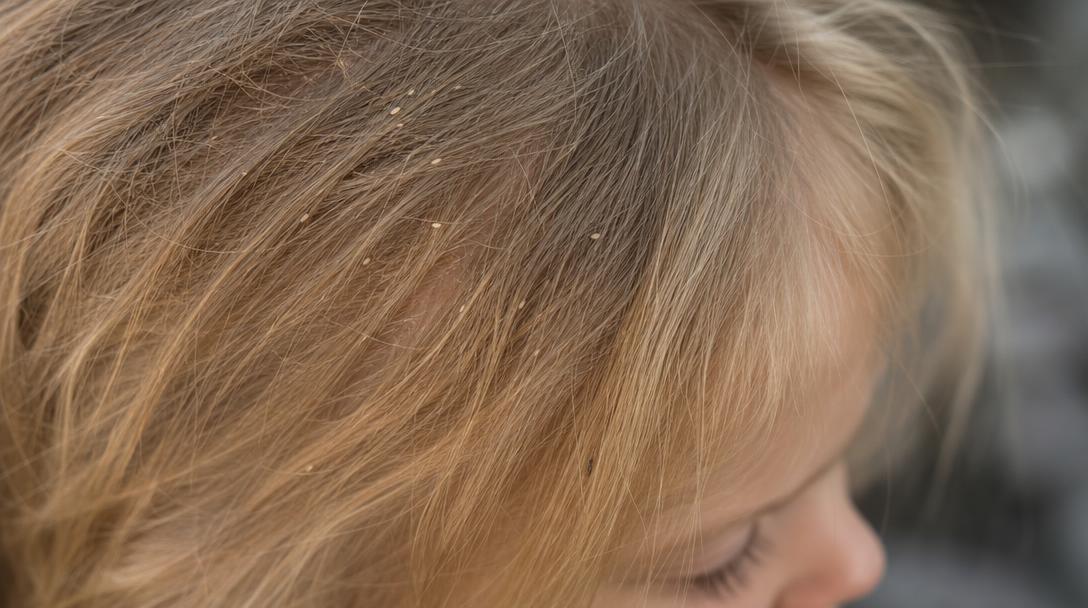
Nits (lice eggs): Oval, teardrop-shaped, and firmly attached to the hair shaft – usually within half an inch of the scalp. Unlike dandruff, nits don’t flick off when you touch them. They’re cemented to the hair with a protein the female louse secretes, and you have to slide them off with your fingernails or a fine-toothed comb. If it moves easily, it’s probably not a nit.
Live lice: Small (sesame seed-sized), brownish-gray, and fast-moving. They avoid light, so they scatter when you part the hair. Most parents see nits before they ever see live lice.
Where to look: Focus on the nape of the neck and behind the ears. These are the warmest areas of the scalp and lice’s preferred zones. Run your fingers through the hair and examine the roots carefully under a bright light.
Symptoms in babies: Itching is the classic symptom of lice, but babies may not scratch in an obvious way. What you might notice instead is unusual fussiness, ear-pulling, or a baby rubbing their head against surfaces. Some babies show no symptoms at all even with an active infestation – the sensitivity to louse saliva that causes itching takes weeks to develop.
Cradle cap produces flakes that are oily and yellowish, loosely attached, and tend to cover larger areas of the scalp. If the debris is white, grain-like, firmly attached, and located within a few centimeters of individual hair shafts, check for lice.
Safe Treatment Options for Babies (by Age)
This is where it gets important to be specific, because what’s safe for a 9-month-old is not safe for a 6-week-old.
Under 2 months old
Chemical treatments are strictly off-limits. Every pharmaceutical option for lice – permethrin, pyrethrin, malathion, spinosad, ivermectin – is contraindicated for infants under 2 months. At this age, a baby’s skin barrier and metabolic systems aren’t developed enough to safely handle these compounds. Wet combing is the only medically endorsed treatment.
2 months to 6 months old
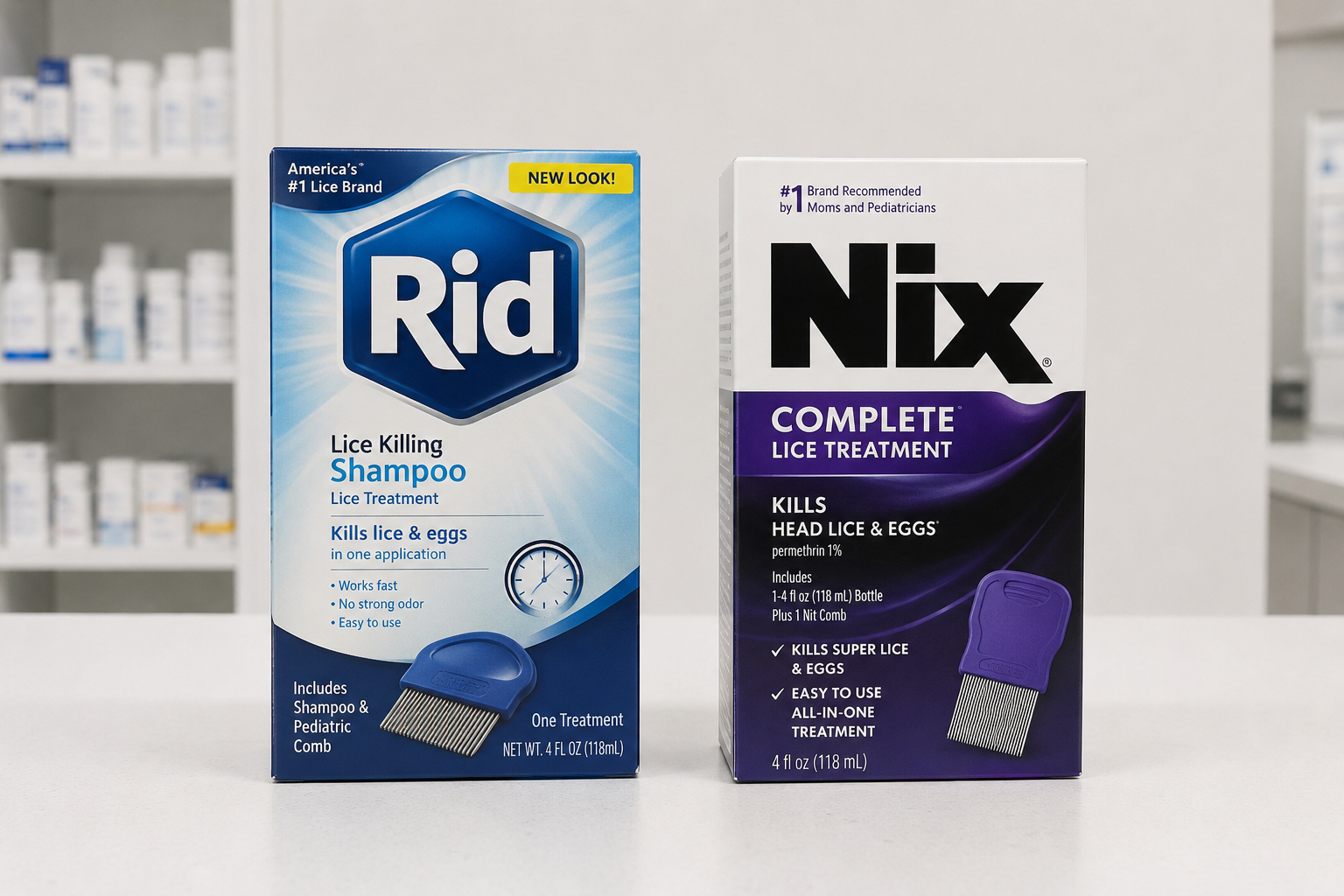
Permethrin 1% (Nix) is the only FDA-approved topical treatment for this age group. It works by disrupting the louse’s nervous system and is generally considered safe at this age when used as directed. That said, even permethrin isn’t magic – it has no effect on eggs (nits), so a second treatment is needed 7 to 10 days later after remaining nits have hatched but before newly hatched lice can lay eggs of their own. Wet combing should accompany any chemical treatment to remove as many nits as possible.
6 months and older
More options open up here. Spinosad (Natroba), ivermectin lotion (Sklice), and benzyl alcohol (Ulesfia) are approved for babies 6 months and older. Each has different mechanisms, and your pediatrician can help you choose based on your specific situation and whether there’s any concern about permethrin resistance in your area – some lice populations have developed resistance to permethrin after decades of overuse.

At any age – wet combing
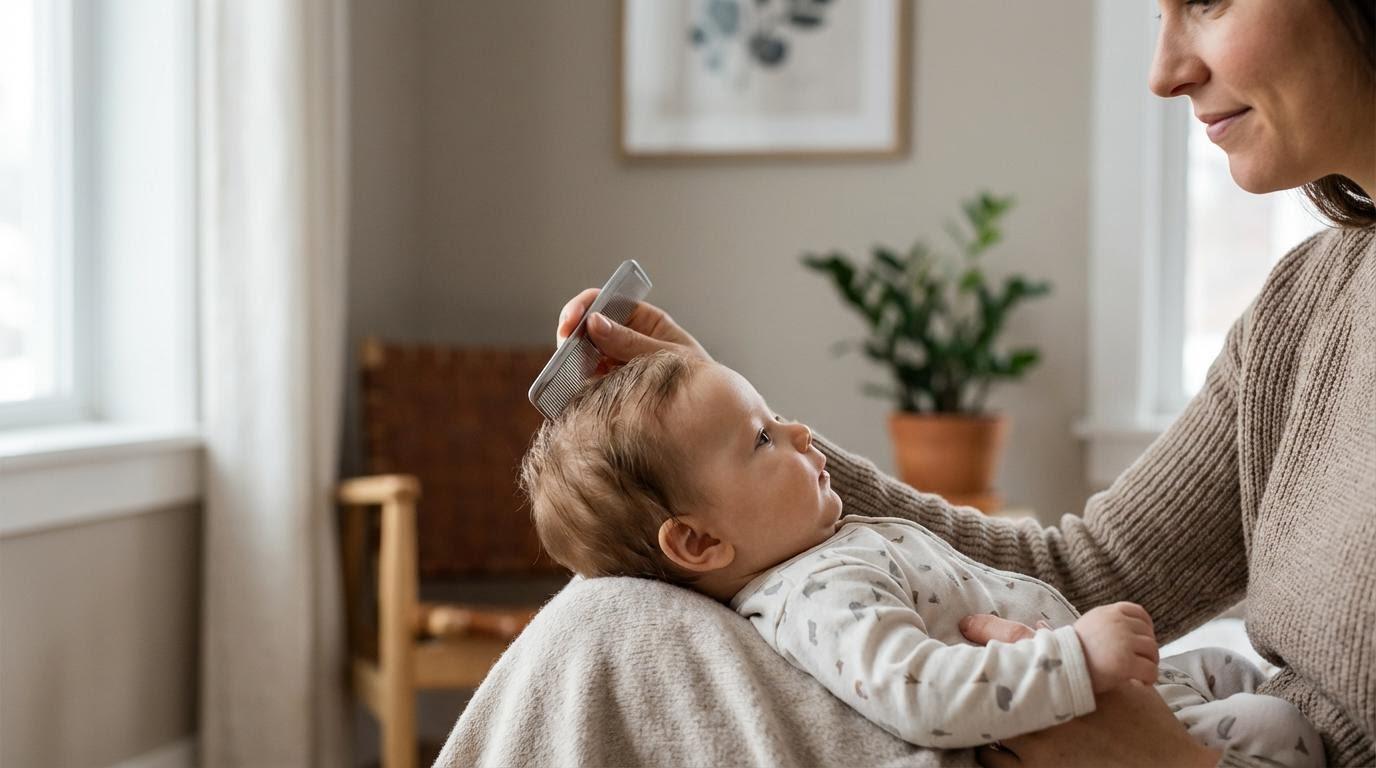
This is what we use on babies at Lice Busters when chemical options are off the table or when parents want a chemical-free approach. The technique requires a proper lice comb (not a cheap drugstore nit comb – a high-quality metal comb with closely spaced tines), conditioner to slow lice movement, and good lighting.
The process takes 20 to 30 minutes for a baby with average hair volume. You coat wet hair with conditioner, section the hair, and comb from root to tip, wiping the comb on a white paper towel after each pass to check for lice and nits. You repeat this every 3 days for 2 to 3 weeks to catch any newly hatched lice before they reach reproductive maturity.
It’s tedious. It works.
How to Do Wet Combing on a Baby: Step-by-Step
This is where generic articles give you vague advice like “use a fine-toothed comb and conditioner.” Here’s what actually works when you’re dealing with a baby who doesn’t want to sit still.
What you need: A stainless steel lice comb (the Terminator or LiceMeister combs are widely recommended), white hair conditioner, bright lighting (a headlamp is genuinely useful), and a white paper towel or paper plate.
Set the scene: Choose a time when your baby is calm – after a bath, during a feeding, or while watching something engaging. A fussy baby makes the process three times harder.
- Wet the hair thoroughly and apply a generous amount of conditioner. The conditioner slows lice down significantly, making them easier to catch.
- Using a wide-toothed comb or your fingers, detangle the hair so the lice comb can move through it smoothly.
- Divide the hair into small sections using hair clips. Work systematically from one side of the head to the other.
- For each section, place the comb at the scalp and drag it slowly toward the tips. Pull the comb through the full length of the hair shaft.
- After each pass, wipe the comb on the white paper towel and inspect what you’ve collected. Live lice will sometimes still be moving. Nits appear as tiny oval specks.
- Rinse hair, then inspect again in sections. Repeat the full combing session every 3 days for 2 to 3 weeks.
Missing the 3-day window is the most common mistake. Lice eggs hatch in 7 to 10 days. If you comb on day one and then wait 2 weeks, you’ll miss the newly hatched generation and the infestation restarts.
What to Do About the Rest of the Household
Treating the baby while ignoring household contacts is the single biggest treatment failure we see. Here’s what else needs to happen:
Check every person who had head-to-head contact with the baby in the past month. That includes parents, siblings, grandparents, and regular babysitters. Lice infestations are rarely limited to one person in a household.
Machine wash bedding and clothing on high heat. Lice die within 24 to 48 hours when removed from the scalp. A cycle through a hot dryer (above 130 degrees Fahrenheit) for 20 minutes kills any lice or nits on fabric. Focus on items that had direct head contact in the previous 48 hours – pillowcases, car seat covers, hooded clothing.
Don’t go overboard with environmental cleaning. Lice are not household pests. They can’t survive more than 1 to 2 days off a human scalp, and they don’t infest furniture, carpets, or mattresses the way fleas or bedbugs do. We see parents spending hours bagging stuffed animals and steam cleaning furniture when that time would be much better spent on a second round of combing. Bag items if it makes you feel better, but it’s not what’s going to end the infestation.
Avoid sharing items with head contact for the next 2 to 3 weeks. Combs, brushes, hats, headbands, pillowcases, and towels should be each person’s own during treatment.
Frequently Asked Questions
Can a newborn get lice?
Technically, yes – a newborn can get lice if there’s head-to-head contact with an infested person. In practice, newborns are almost never exposed because their social world is so limited. But if an older sibling in the house has an active case, even a newborn is at some risk from close contact, co-sleeping, or being held by an infested family member. If you suspect a newborn has lice, contact your pediatrician before attempting any treatment. For infants under 2 months, wet combing is the only safe option.
Can I use lice shampoo on my baby?
It depends entirely on your baby’s age. For babies under 2 months, no – chemical lice treatments are not safe. For babies 2 months and older, permethrin 1% is the first option that becomes available, but always consult your pediatrician before applying any chemical treatment to a young infant. Never use products containing lindane, malathion, or high concentrations of permethrin on babies.
How do I know if my baby has lice?
Look for nits – oval, yellowish-white specks firmly attached to individual hair shafts near the scalp, most commonly at the nape of the neck and behind the ears. Unlike dandruff, nits do not brush off easily. You may also spot live lice: small (1 to 3mm), fast-moving, brownish insects that scatter when you expose them to light. A baby who is more fussy than usual, rubbing their head, or pulling at their ears may be showing early signs of an infestation.
Can lice harm a baby?
Lice are not medically dangerous in the traditional sense – they do not carry disease in North America and they do not bite in a way that causes serious injury. The main risk is secondary skin infection from scratching. A baby with lice may develop irritated, raw patches on the scalp from scratching or rubbing, which can occasionally become infected. The bigger risk is that lice are often missed or undertreated in babies because parents focus on older children, allowing the infestation to grow. Get it treated, but don’t panic.
What about essential oils or natural treatments for baby lice?
Essential oils – tea tree, lavender, eucalyptus – are frequently recommended in online forums as natural lice treatments. There is no clinical evidence that they effectively treat lice infestations, and many essential oils are irritating or even toxic to young infants at the concentrations you would need to have any effect. Dimethicone-based products (silicone oils, like those in some specialty lice treatments) have better evidence behind them and are safer for babies, but still consult your pediatrician before using anything on a young infant.
How long does it take to get rid of lice on a baby?
With consistent wet combing every 3 days, most infestations are cleared within 2 to 3 weeks. With a chemical treatment plus combing, the timeline can be similar – the chemical kills live lice but not eggs, so the combing still needs to continue to catch newly hatched nits before they can reproduce. The most common reason treatment drags on longer is inconsistent combing intervals or missing an active case in another household member.
The Bottom Line
If you’re reading this because you found something in your baby’s hair today, take a breath. Lice are treatable, lice are not dangerous, and this situation is far more common than you’d guess.
The most important things to remember: the baby almost certainly didn’t bring lice into your house – an older child or adult contact did. Check every head in your household before you treat anyone. Use wet combing for very young infants, and consult your pediatrician before applying any chemical treatment to a baby under 2 years old.
At Lice Busters, we’ve seen this play out hundreds of times. Every family that follows the full household approach – checking everyone, treating simultaneously, combing consistently – gets through it within 3 weeks. The families who struggle are the ones who treat only the baby and wonder why it keeps coming back.
If you’re dealing with a full-household case or want a professional treatment for your infant, we’re here to help. But if you’re equipped with the right comb and the right information, there’s a good chance you can handle this at home.