
Every lice season we get the same panicked call at Lice Busters NYC: “We found lice on our daughter – do we need to treat the dog too?” After 50,000+ human head lice treatments across New York City, here is the answer almost no pet website gives you straight: yes, dogs can get lice, but your dog has nothing to do with your child’s infestation. Not now, not ever. This guide covers what dog lice actually are, what they look like, whether they cross between species, and the operator-level pattern we’ve seen in tens of thousands of cases that vet blogs consistently miss.
Can Dogs Get Lice? Yes, But Not the Kind You’re Worried About
Dogs absolutely get lice. It’s a real parasitic infestation called canine pediculosis, most common in dogs that are stray, neglected, elderly, or living in crowded shelter conditions. Well-cared-for pet dogs get it rarely, but it happens.
There are two functional categories of dog lice:
- Chewing lice that feed on skin debris and surface secretions. The main species is Trichodectes canis (found worldwide), plus Heterodoxus spiniger in tropical regions.
- Sucking lice that feed on blood. The dog species is Linognathus setosus, and heavy infestations can cause anemia in puppies or small dogs.
Both spread the same way: direct dog-to-dog contact, or shared brushes, bedding, collars, and grooming tools. A dog louse spends its entire 3-to-4 week life cycle on the host and survives only a few days if it falls off. That detail matters more than it sounds, and we’ll come back to it.
Can Dogs Get Human Lice (or Give Lice to Your Kids)?
No. This is the single most important fact in this entire article, so I’ll be blunt: lice are species-specific, and the firewall between dog lice and human lice is absolute.
The human head louse, Pediculus humanus capitis, is evolutionarily adapted to grip human hair shafts and feed on human scalp blood. Drop one on a dog and it cannot grip the fur, cannot feed properly, and cannot reproduce. It dies. The reverse is equally true: a Trichodectes canis louse that lands on a person finds none of the conditions it needs and dies within hours.
So to answer the exact questions families search:
- Are dog lice contagious to humans? No. They cannot feed or breed on you.
- Can dogs get lice from children? No. Your child’s head lice will not transfer to or survive on the family dog.
- Can dogs get human lice? No, for the same biological reason.
A dog louse on your arm is a dead louse walking. It is biologically incapable of starting an infestation on you or your kids, and a human louse on the dog meets the same fate.

Dog Lice Symptoms and What They Look Like
If you actually want to check your dog, here is what an infestation looks like. Dog lice symptoms are driven by irritation and feeding:
- Persistent, intense scratching and biting at the skin
- A dry, dull, rough-looking coat, sometimes matted
- Hair loss around the ears, neck, shoulders, and groin
- Visible sores, scabs, or skin redness from self-trauma
- Restlessness and difficulty settling
- In severe sucking-lice cases: lethargy or anemia, especially in puppies
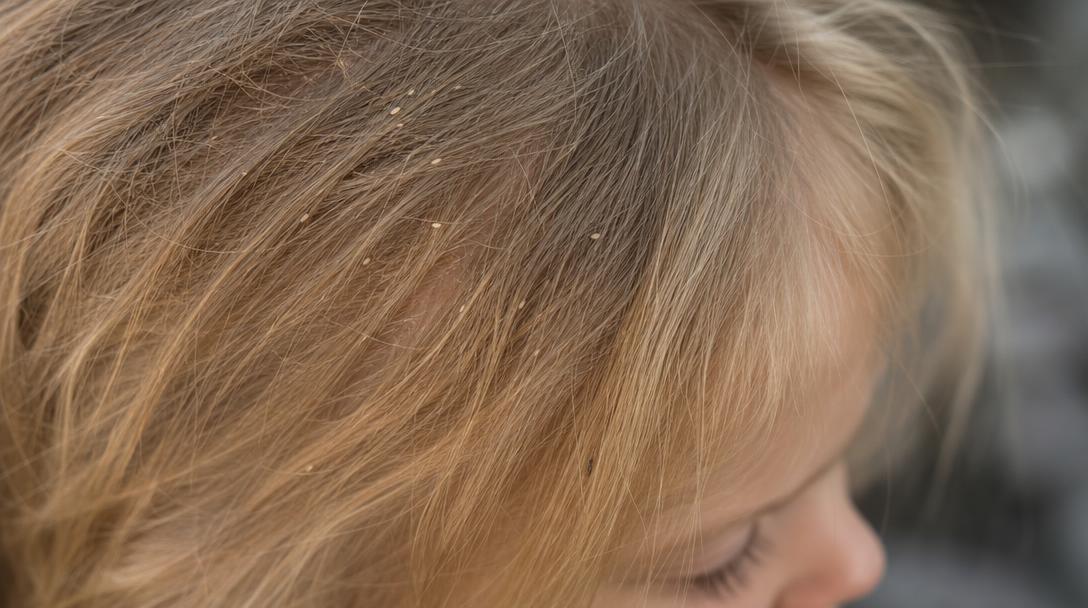
What do dog lice look like? Adult dog lice are visible to the naked eye – roughly the size of a sesame seed, about 2 to 4 millimeters, and yellow, tan, or light brown. They move slowly. The eggs (nits) look like tiny white grains of sand cemented onto individual hair shafts near the skin.
Here is the field test we teach for the human version that works just as well on dogs: pull a few hairs with the flakes attached and shake them. Dandruff falls off. Nits stay cemented in place. If it clings, you’re likely looking at lice eggs, not dry skin.
The 50,000-Family Pattern Nobody Tells You
This is the part no vet blog will tell you, because vets see the dog side and we see the human side. In over 50,000 human head lice treatments at Lice Busters NYC, we have never once traced a child’s infestation back to the family dog. Not a single case. The dog is almost always a scapegoat.
Here is the pattern we see on repeat. A parent finds lice on their kid, panics, and burns an entire weekend bathing the dog, washing the dog’s bed, and quarantining a confused golden retriever. Meanwhile the actual source – a classmate, a sleepover, a shared hairbrush, a sports helmet – goes untreated, and the human infestation marches on.
The math is simple. Human head lice spread through direct head-to-head contact between people, overwhelmingly kid-to-kid. The dog is a biological dead end for human lice. Every hour spent treating the pet is an hour not spent on the comb-out that actually ends the outbreak. If you’ve found lice in the family, skip the dog and focus on the people – our step-by-step lice removal process explains exactly where that time should go.
What to Actually Do (You Have One Problem, Not Two)
Separate the two scenarios cleanly, because they almost never overlap.
If your dog genuinely has lice (you saw the parasites or the vet confirmed it):
- Confirm with a vet – lice are routinely confused with fleas or mites
- Use a vet-recommended treatment (fipronil, imidacloprid, selamectin, or permethrin – never permethrin on cats)
- Repeat treatment on schedule for at least one month to catch newly hatched nymphs
- Wash all bedding, collars, leashes, and sweaters in hot water; disinfect grooming tools
- Keep the dog away from other dogs until fully clear
For the clinical dog-side reference, the Merck Veterinary Manual’s lice guidanceis the authority.
If a person in your home has lice: it did not come from the dog. Full stop. Treat it as a human problem – thorough wet-combing, check every household member, and don’t waste a minute on the pet. Our head lice resource center walks through the human protocol step by step.
Frequently Asked Questions
Can dogs get lice from humans?
No. Human head lice (Pediculus humanus capitis) are adapted exclusively to humans. They cannot grip dog fur, feed on dog blood properly, or reproduce on a dog, so any human louse that lands on a dog dies quickly.
Are dog lice contagious to humans?
No. Dog lice are species-specific to dogs. If a dog louse gets onto your skin it cannot feed or breed and dies within hours, so you cannot develop a lice infestation from your dog.
Can dogs get lice from children?
No. This is one of the most common myths we debunk at Lice Busters. A child’s head lice cannot transfer to, survive on, or reproduce on the family dog. The parasites do not cross the species barrier in either direction.
What do dog lice look like?
Adult dog lice are about 2 to 4 millimeters long – roughly sesame-seed sized – and yellow to light brown. They move slowly through the coat, and the eggs look like white grains of sand glued to individual hairs near the skin.
How do I know if it’s lice or fleas?
Fleas are dark, fast, and jump; lice are pale, slow, and stay put on the hair. Flea dirt smears red on a wet paper towel, while nits cling stubbornly to hair shafts and don’t brush off. A vet can confirm under magnification when you’re unsure.
Can my dog get lice from the groomer?
Yes, indirectly. Shared brushes, clippers, and tables that aren’t disinfected between dogs can transfer chewing lice. Reputable groomers sanitize tools between every dog, which is why lice are rare among regularly groomed pets.
The Bottom Line
Yes, dogs can get lice – but it’s a closed loop. Dog lice stay on dogs, human lice stay on humans, and the species barrier never breaks in either direction. If you found lice on your child, the family dog is innocent, and in 50,000+ treatments our team of specialists has never seen it happen any other way. Treat the dog’s problem as the dog’s, treat the human problem as human, and stop losing weekends to a parasite that was never going to cross over.